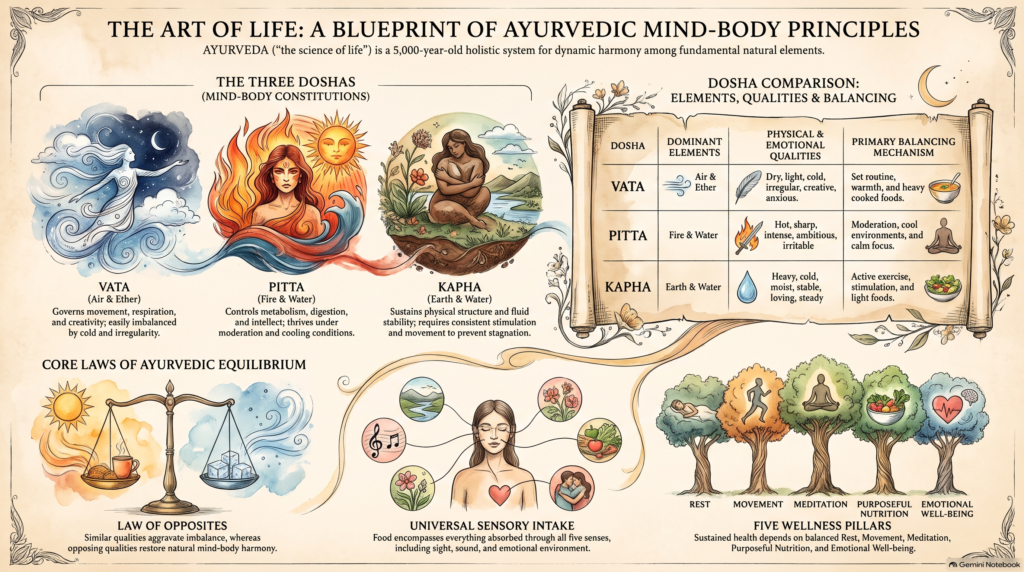
1. Foundations & Philosophy of Ayurveda
- The Meaning of Ayurveda: Originating from Ayur (life) and Veda (science/knowledge), Ayurveda translates as the “science of life” or the “art of a long, happy life”. It serves as a practical, holistic guide to discovering inner truth and managing personal well-being across the body, mind, and soul.
- Origins and Recognition: Dating back over 5,000 years, Ayurveda is the oldest traditional medical system continuously practiced today. Revealed to ancient sages (rishis) through deep meditation, it was historically passed down via oral aphorisms and comprised eight distinct branches of medicine (including internal medicine, surgery, pediatrics, and psychiatry). In 1985, it was officially recognized by the World Health Organization (WHO) alongside Yoga.
2. The Five Elements & SensesAyurveda views human beings as a microcosm of the macrocosm (“man is the compendium of the universe”). All matter is composed of five universal energies/elements, ranked from most subtle to densest, each corresponding to an anatomical function and sensory perception:
- Ether / Space (Akasha): The open space allowing events and movement to occur; corresponds to bodily cavities (nasal, ear, intercellular space) and the sense of hearing.
- Air (Vayu): The dynamic energy of change, movement, and mental thoughts; governs respiration, blood circulation, and the sense of touch through the skin.
- Fire (Agni): The power of heat, digestion, and chemical transformation; governs metabolism, visual perception, and discernment/intelligence through the sense of sight.
- Water (Jala): Fluidity, cohesion, and emotional attachment; governs all bodily liquids, tissue hydration, and the sense of taste.
- Earth (Prithvi): Stability, solid structure, and grounding; forms bones and physical tissues, connecting to the sense of smell.
3. The Three Doshas (Constitutional Energies)A dosha literally means “that which tends to imbalance”. While every individual possesses all three doshas from birth, the specific proportion determines their natural constitution (Prakriti), whereas temporary disturbances represent an altered state (Vikriti):
- Vata (Ether + Air):
- Core Qualities: Dry, cold, light, subtle, mobile, clear, and irregular.
- Psychological & Physical Expression: Quick-thinking, highly creative, enthusiastic, and artistic; when imbalanced, prone to fear, anxiety, restlessness, and insomnia. Physically, Vata individuals lean toward a narrow frame, prominent joints, dry skin/hair, and irregular digestion or constipation.
- Remedy & Balance: Requires regularity, warm cooked meals, moisture, healthy fats/oils, and structured daily routines.
- Pitta (Fire + Water):
- Core Qualities: Hot, sharp, intense, light, slightly oily, and penetrating.
- Psychological & Physical Expression: Highly focused, courageous, sharp-minded, and natural leaders; when imbalanced, prone to irritability, anger, intense competition, and hypercritical judgment. Physically, Pitta shows medium build, fair/reddish skin, light eyes, strong appetite, and susceptibility to acid indigestion, skin rashes, and loose stools.
- Remedy & Balance: Requires moderation, cool environments, calming routines, sweet/refreshing flavors, and avoiding extreme spices and excessive heat.
- Kapha (Water + Earth):
- Core Qualities: Heavy, cold, moist, slow, stable, and static.
- Psychological & Physical Expression: Loving, patient, forgiving, loyal, and grounded; when imbalanced, prone to lethargy, resistance to change, possessiveness, over-attachment, and depression. Physically, Kapha exhibits a solid, large-boned frame, thick wavy hair, large eyes, strong stamina, slow metabolism, and a tendency toward mucus accumulation and weight gain.
- Remedy & Balance: Requires stimulation, vigorous physical movement, light, dry, and warm foods, and stepping out of comfort zones.
4. Guiding Ayurvedic Principles
- Opposites Balance, Similarities Spoil: Adding qualities identical to an aggravated dosha worsens the imbalance (e.g., spicy food aggravating a fiery Pitta), while introducing opposing qualities restores equilibrium.
- Food Enters Through All Senses: Digestion is not limited to what is swallowed; the mind and body feed on sights, sounds, company, aromas, and emotional atmospheres during mealtime.
- Agni vs. Ama: Agni is the transformative internal digestive fire. When Agni is compromised or overwhelmed, undigested toxic residue (Ama) accumulates in the tissues and digestive tract, laying the foundation for chronic discomfort and disease.
5. The Three Gunas (Mental Attributes)The universe and human consciousness operate through three primary energetic qualities (Gunas):
- Tamas: Darkness, inertia, lethargy, heaviness, and ignorance; represented by a dormant seed beneath the soil.
- Rajas: Energy, dynamic passion, movement, effort, and conflict; the sprout breaking through hard earth.
- Sattva: Purity, harmony, clarity, understanding, and peaceful light; the fully blooming flower.
6. The Five Pillars of WellnessDeepak Chopra and Ayurvedic traditions highlight five interdependent foundations that uphold vitality:
- Rest: True restorative relaxation and sound sleep free from residual daytime mental anxiety.
- Movement: Regular bodily engagement, posture awareness, and spinal stretching to counter sedentary stagnation.
- Meditation: Grounding awareness fully in the present moment through mantras, silence, or conscious breathing.
- Nourishing Food: High-quality, freshly prepared meals blessed with gratitude and mindfulness.
- Emotional Well-Being: Cultivating high-vibrational states of compassion, tolerance, and love while releasing toxic emotional residue.
7. Daily and Seasonal Rhythms (Dinacharya & Ritucharya)The Daily Energy Clock
- 6:00 AM – 10:00 AM (Kapha): Heavy and slow; ideal for early rising, gentle movement, and a light breakfast (such as fresh fruit).
- 10:00 AM – 2:00 PM (Pitta): Peak solar heat and strongest Agni; lunch should be the largest, most substantial meal of the day to optimize transformation.
- 2:00 PM – 6:00 PM (Vata): Mobile and creative; ideal for focused cognitive tasks, art, problem-solving, and regular light exercise.
- 6:00 PM – 10:00 PM (Kapha): Settling energy; ideal for a light, warm, cooked dinner before winding down.
- 10:00 PM – 2:00 AM (Pitta): Internal processing time; Agni metabolizes thoughts, emotions, and cellular repair (sleeping during this period is essential).
- 2:00 AM – 6:00 AM (Vata): Ethereal, clear morning energy; ideal for waking naturally, meditation, and spiritual reflection.
Core Daily Habits (Dinacharya)
- Tongue Cleaning (Jihwa Prakshalana): Scraping the tongue with a metal spoon or tongue scraper from back to front each morning to physically remove overnight Ama rather than redepositing it with a toothbrush.
- Warm Water: Sipping warm or hot water throughout the day to support Agni and avoid cold iced drinks that dampen metabolic heat.
- Natural Urges (Vegas): Never repressing sneezes, yawns, burps, or elimination calls, which strains internal organs.
- Abhyanga: Self-massage using warm sesame oil (grounding and warming for cooler seasons) or coconut oil (cooling for summer) before bathing.
Seasonal Adjustments (Ritucharya)
- Summer (Pitta Season): Mitigate internal heat with fresh fruits, cooling salads, sweet juices, hydration, and shade.
- Autumn/Winter (Vata Season): Combat cold, dry wind with warm, oily, well-cooked stews, root vegetables, regular schedules, and warming spices.
- Spring (Kapha Season): Prevent excess congestion and mucus by reducing heavy dairy, refined wheat, and sweets while increasing movement and stimulating spices.
8. Natural Therapies, Kitchen Remedies & Mind-Body Practices
- Specialized Therapies:
- Abhyanga: Full-body synchronized oil massage stimulating lymphatic circulation, soothing the nervous system, and releasing Ama from tissues.
- Shirodhara: A continuous, rhythmic stream of warm herbal oil poured across the forehead to calm mental restlessness, panic, and insomnia.
- Other therapeutic modalities include Marma therapy (vital acupressure energy points), Vastu (spatial harmony), Jyotish (Vedic astrology), and Gandharva Veda (sound/music therapy).
- The Kitchen Pharmacy:
- Ginger: An indispensable root for clearing respiratory congestion and enhancing sluggish Agni.
- Honey Caution: Honey is medicinal when consumed raw and unheated; heating or baking honey above boiling temperatures alters its structure into a toxic compound.
- Triphala & Ashwagandha: Classical Indian herbal formulas used in cycling routines to balance elimination and regulate Agni without dependence.
- Infusions vs. Decoctions: Infusions steep delicate leaves/flowers in boiled water, whereas decoctions gently simmer tougher roots (like ginger) for concentrated potency.
- Mind-Body Integration:
- Breathing & Postures: Surya Namaskar (Sun Salutations), gentle Chi Kung, and Nadi Shodhana (alternate nostril breathing) balance nervous channels and oxygen flow.
- Grounding Exercises: Jin Ji Du Li (standing blindfolded on one leg for hemispheric brain balance), grounding in nature by hugging trees, and guided gratitude meditation utilizing the mantra “Shreem Namah”